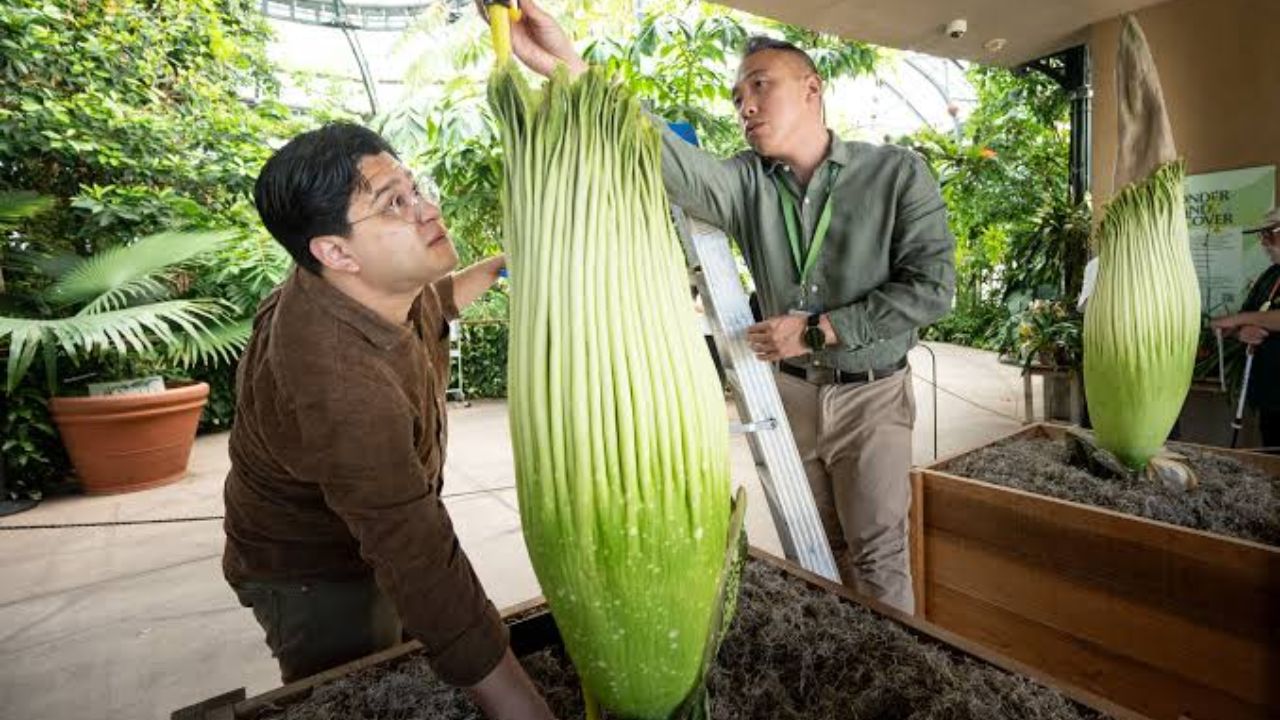
SAN MARINO, California — Visitors to the Huntington Library are being treated to an exceptionally rare botanical event after two corpse flowers began blooming at nearly the same time, filling the gardens with their infamous odor that has often been compared to rotting flesh.
The nonprofit organization announced Sunday evening that its towering corpse flower Odorysseus bloomed first, with a second, smaller flower named Odora beginning to open shortly afterward. Simultaneous corpse flower blooms are uncommon, making the event a special attraction for plant enthusiasts and curious visitors alike.
Two Rare Corpse Flowers Bloom Together
The Huntington Library shared the exciting news on social media, celebrating the unusual double bloom with the message, “And so it begins.”
Odorysseus, the larger of the two plants, was the first to fully bloom. Soon after, staff noticed that Odora had also begun opening its spathe, setting the stage for an uncommon display featuring both flowers at nearly the same time.
Because corpse flowers bloom unpredictably and only for a short period, visitors have a limited opportunity to witness the spectacular event before the blooms begin to fade.
Why Corpse Flowers Smell Like Rotting Flesh
Corpse flowers are famous around the world for producing one of the strongest and most unusual scents in the plant kingdom.
During peak bloom, the flowers release an odor resembling decaying meat or rotting flesh. While unpleasant to humans, the smell serves an important purpose in nature by attracting insects such as carrion beetles and flesh flies, which help pollinate the plant.
The distinctive odor is usually strongest during the first night of blooming before gradually fading over the following day.
Odora Has a Unique Shape
The Huntington Library also revealed that Odora has an unusual appearance due to a developmental irregularity.
Unlike a typical corpse flower, Odora’s spadix—the tall central structure rising from the flower—is inverted. According to the organization, this rare growth pattern changes the flower’s appearance but is not expected to interfere with the blooming process.
Sharing another update on Instagram, the Huntington joked about the unexpected second bloom.
“Plot twist! Odora wants to steal the spotlight,” the organization wrote. “Odora’s spathe has started opening, too. Tiny but mighty, we’re in for quite the show with a double bloom.”
The playful update quickly drew attention from plant lovers eager to witness the rare botanical spectacle.
Visitors Invited to Experience the Rare Bloom
The Huntington Library is encouraging the public to visit while both flowers remain in bloom.
Corpse flowers typically stay open for only a brief window, making each blooming event a major attraction. Visitors can experience both the towering plants and their unmistakable aroma before the flowers naturally begin to close.
The organization noted that the gardens are open from 10 a.m. to 5 p.m., Wednesday through Monday, and remain closed on Tuesdays.
Reservations are required Friday through Sunday, on holidays, and during peak visitation periods. Guests looking for a different experience can also take advantage of special Twilight Stroll hours, with additional information available through the Huntington Library.
A Rare Botanical Attraction
Native to the rainforests of Indonesia, corpse flowers are among the largest flowering plants in the world and are known for blooming only once every several years. Their unpredictable blooming cycle, enormous size and powerful odor make each flowering a highly anticipated event at botanical gardens worldwide.
With both Odorysseus and Odora blooming simultaneously, visitors have a rare opportunity to witness an unusual natural phenomenon that is unlikely to occur again anytime soon.
What do you think about the famous corpse flower? Would you visit just to experience its rare bloom—even with its infamous smell? Share your thoughts respectfully in the comments below.