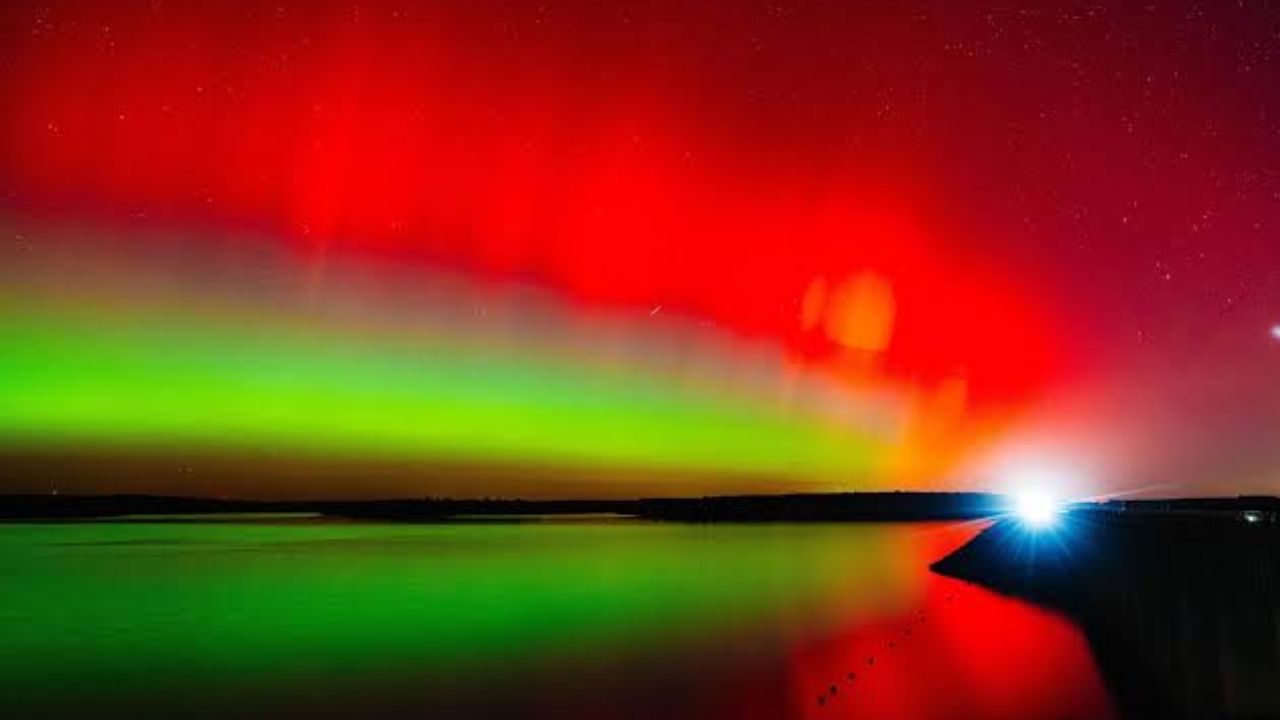
Fairbanks, Alaska — Skywatchers across parts of the northern United States could have another opportunity to spot the Aurora Borealis tonight, as the National Oceanic and Atmospheric Administration (NOAA) forecasts that the northern lights may be visible in portions of nine states.
While tonight’s display isn’t expected to be as intense as some of the spectacular aurora events seen over the past two years, clear skies and minimal light pollution could still provide favorable viewing conditions for those living near the northern border.
These 9 States Could See the Northern Lights Tonight
According to NOAA’s latest aurora forecast, Alaska remains the best place in the country to witness the northern lights, with much of the state’s interior expected to have a high probability of auroral activity.
In addition to Alaska, residents in parts of the following states may also have a chance to see the lights if weather conditions cooperate:
- North Dakota
- Washington (northern areas)
- Idaho (northern areas)
- Montana
- South Dakota (northern areas)
- Minnesota
- Wisconsin
- Michigan
Visibility will depend on local cloud cover, darkness, and how far north observers are located.
Aurora Activity Expected to Be Weaker Tonight
NOAA forecasts a Kp index of 3 for Tuesday night, indicating relatively weak auroral activity.
Unlike stronger geomagnetic storms—which can push the northern lights much farther south—no geomagnetic storms are expected tonight or over the next several days.
As a result, the aurora is expected to remain concentrated across northern latitudes, making sightings less likely outside the forecast zone.
Best Time and Places to Watch the Aurora
Experts say the best opportunity to view the northern lights is from locations with little to no artificial light and an unobstructed view of the northern horizon.
NOAA recommends heading to higher elevations whenever possible and watching the sky between 10 p.m. and 2 a.m. local time, when auroral activity is typically strongest.
Checking local weather forecasts before heading out is also important, as cloud cover can quickly block visibility.
Tips for Photographing the Northern Lights
Capturing the aurora can require a few simple adjustments to camera settings.
Photography experts recommend using a tripod to prevent blurry images, pairing it with a wide-angle lens, and selecting a longer shutter speed to allow more light into the camera.
Smartphone users can also improve results by enabling Night Mode, turning off the flash, and shooting in RAW format if their device supports it.
Why the Northern Lights Have Been So Active
The northern lights became unusually common across the United States during 2024 and 2025 as the Sun entered the solar maximum phase of its approximately 11-year activity cycle.
During this period, increased solar activity produced more geomagnetic storms, allowing the aurora to appear much farther south than usual.
According to NASA, auroral activity reached its highest level in roughly 500 years during 2024. Scientists expect northern lights displays to gradually become less frequent over the coming years as solar activity begins to decline following the peak of the current solar cycle.
Are you planning to watch the northern lights tonight? If you’ve ever photographed the Aurora Borealis or hope to see it this time, share your experience and viewing plans in the comments below.