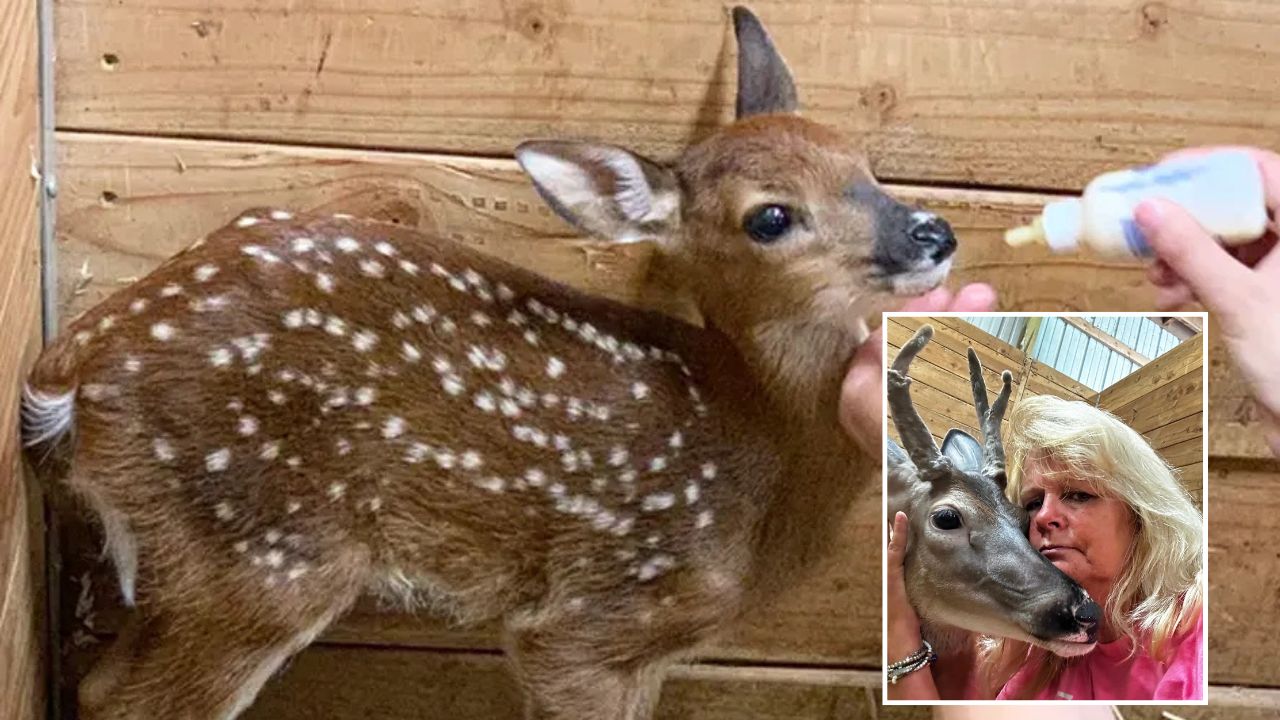
Lawrenceville, New Jersey — A New Jersey woman who spent years caring for an orphaned deer she rescued as a newborn has been found guilty of illegally keeping the animal, bringing a highly emotional and controversial wildlife case one step closer to sentencing.
Cammy Lowe, owner of TLC Country Stables in Lawrenceville, has argued that she simply saved the life of a helpless fawn after finding him abandoned in the woods. State officials, however, said wildlife laws prohibited her from keeping the animal without the proper permits.
The case has sparked debate among animal lovers and wildlife advocates, with supporters describing Lowe as a rescuer while state officials insist wildlife regulations exist to protect both animals and public health.
Orphaned Fawn Became a Beloved Farm Resident
According to court records and local reports, Lowe discovered the newborn deer in 2019 lying near his deceased mother.
After contacting several wildlife rescue organizations and allegedly being advised to leave the animal in the wild, Lowe decided to take the fawn home rather than leave him alone.
She named the deer Rudy, short for Rudolph, and raised him on her 30-acre property for the next several years.
What began as an act of compassion eventually turned into a legal battle when wildlife authorities learned that the deer was being kept on the farm.
Anonymous Tip Triggered Investigation
The case intensified in July 2024 after New Jersey Fish and Wildlife Conservation Police received an anonymous complaint alleging that Lowe was harboring a wild deer.
Conservation Police Officer Lt. Andrew Riviello visited the property and located Rudy inside the stable.
During the inspection, authorities photographed the deer and issued Lowe a notice related to the state’s effort to seize the animal. Body camera footage presented during the trial captured an emotional exchange between Lowe and the officer.
“I’m going to start crying; he is my baby, and I’ll take him to Canada if I have to,” Lowe reportedly told the officer.
Following the inspection, Lowe applied for a permit that would allow her to legally keep Rudy. However, state officials denied the application weeks later.
Judge Finds Lowe Guilty on Multiple Violations
Earlier this month, Municipal Court Judge Louis Sancinito found Lowe guilty of several offenses connected to Rudy’s possession.
The convictions included:
- Possessing a deer without a permit
- Interfering with a conservation officer attempting to confiscate the animal
- Having the deer illegally castrated
According to reports, the judge relied heavily on Lowe’s own statements during the investigation, including admissions regarding the deer’s care and treatment.
The court also considered Lowe’s inability to reveal Rudy’s current whereabouts. Lowe has maintained that the deer escaped from the barn and is no longer under her care.
While delivering his ruling, the judge stated that courts must focus on facts rather than assumptions and noted that wildlife officers were carrying out their legal responsibilities.
Alabama Ice Cream Shop Owners Charged After Confronting Customer Over One-Star Review
Defense Says State Went Too Far
Lowe’s attorney, John Hartmann, sharply criticized the outcome and argued that his client acted out of compassion rather than criminal intent.
“Ms. Lowe provided the little fawn a safe, comfortable, and loving environment,” Hartmann said.
The defense also challenged aspects of the investigation, questioning whether authorities properly followed legal procedures and arguing that officials never physically examined the deer to verify some of the allegations.
According to previous reports, state officials had offered Lowe a plea agreement that would have required a relatively small fine in exchange for surrendering Rudy.
Lowe rejected the proposal, believing the deer could ultimately be euthanized if handed over to authorities.
Health Concerns Played a Role in State’s Decision
State wildlife officials previously cited concerns about chronic wasting disease, a fatal neurological illness that affects deer populations, as one reason for denying Lowe’s permit application.
Although the disease does not pose a threat to humans or livestock, wildlife agencies closely monitor its spread and often enforce strict regulations regarding the possession of wild deer.
Those concerns became a central part of the state’s argument for removing Rudy from private ownership.
Sentencing Scheduled Next Month
Lowe is expected to be sentenced next month, while supporters continue rallying around her cause. She has also launched a fundraising campaign to help cover legal expenses and raise awareness about the case.
In her appeal to supporters, Lowe asked a question that has become the focal point of the public debate surrounding her situation:
“Did you know you could go to jail for saving an animal’s life?”
As sentencing approaches, the case continues to generate discussion about wildlife laws, animal rescue efforts, and where the line should be drawn between compassion and legal responsibility.
What do you think? Should people who rescue orphaned wild animals be given more flexibility under the law, or are strict wildlife regulations necessary to protect animals and public health?
Share your thoughts respectfully in the comments below.