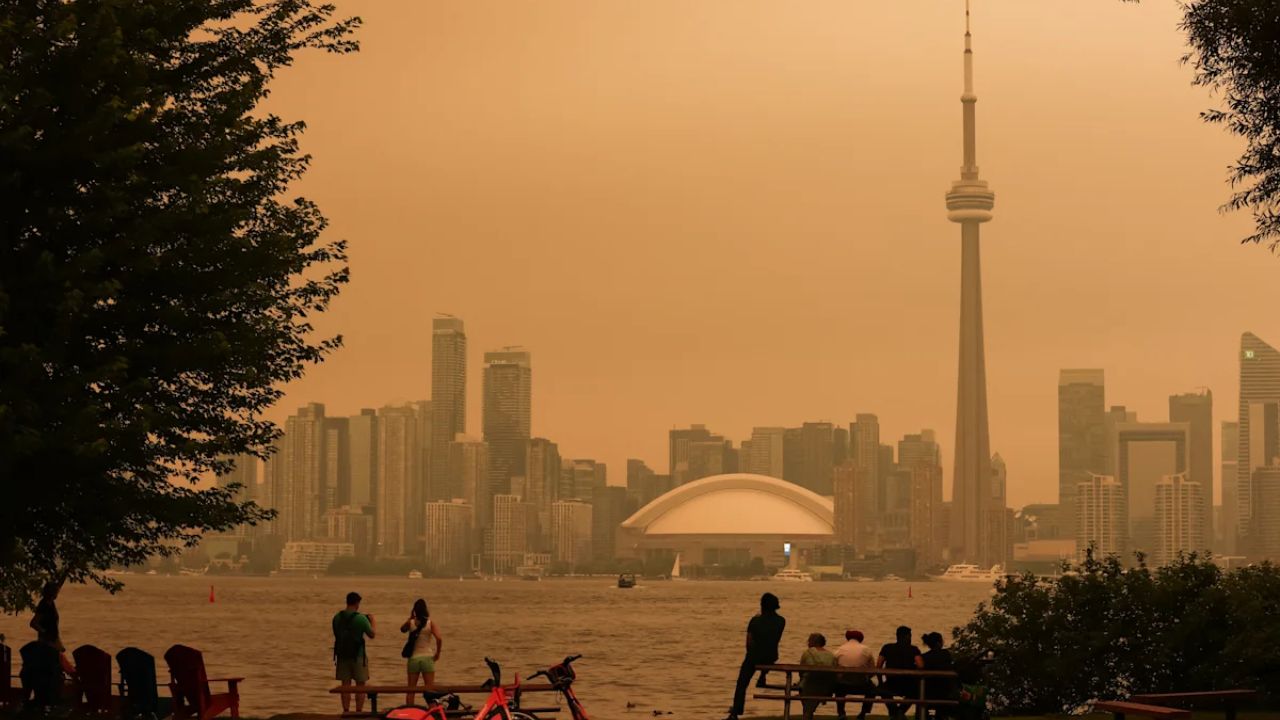
If the air outside smells like a campfire and the sky looks hazy, you are not imagining it — and health officials want you to take it seriously. Smoke from massive wildfires burning across Canada has now blanketed at least 18 US states, triggering emergency air quality alerts from the Great Lakes down into the Mid-Atlantic region.
Federal weather officials issued the widespread alerts on Friday, warning residents that conditions remain dangerous and urging vulnerable populations — children, the elderly, and those with asthma or heart conditions — to stay inside with windows closed.
The hardest-hit areas have been Minnesota and Michigan. In parts of northern Minnesota, the Air Quality Index climbed above 800 on Friday — and the day before, it briefly surpassed 1,000, making it the most dangerous air quality reading anywhere in the United States at that time. For context, anything over 100 is considered unhealthy, and anything above 300 is classified as hazardous.
Forecasters are not offering much relief for the coming days. Officials warned that air quality “remains a concern this weekend” as northwest winds continue to push smoke directly toward the northeastern quarter of the country. The smoke plume stretches from the upper Midwest all the way south into the Mid-Atlantic, affecting tens of millions of people.
Residents across affected states are being urged to check local air quality readings before heading outdoors, avoid strenuous outdoor activity, use N95 or KN95 masks if going outside is unavoidable, and keep air purifiers running indoors. Officials say this is not a situation to take lightly — prolonged exposure to air at these levels can cause serious respiratory damage even in otherwise healthy adults.
Monitor your local air quality index at airnow.gov and follow updates from your state’s emergency management agency. If you or a family member experience difficulty breathing, chest pain, or severe coughing, seek medical attention immediately.