The Atlantic hurricane season is off to its quietest start in more than a decade — and meteorologists are increasingly pointing to one culprit: El Niño.
El Niño is a natural climate pattern defined by unusually warm water temperatures in the equatorial Pacific Ocean. When it takes hold, it reshapes weather patterns across the globe. This year’s El Niño was officially declared in June and is showing signs of becoming a record-breaking “Super El Niño” by the end of 2023.
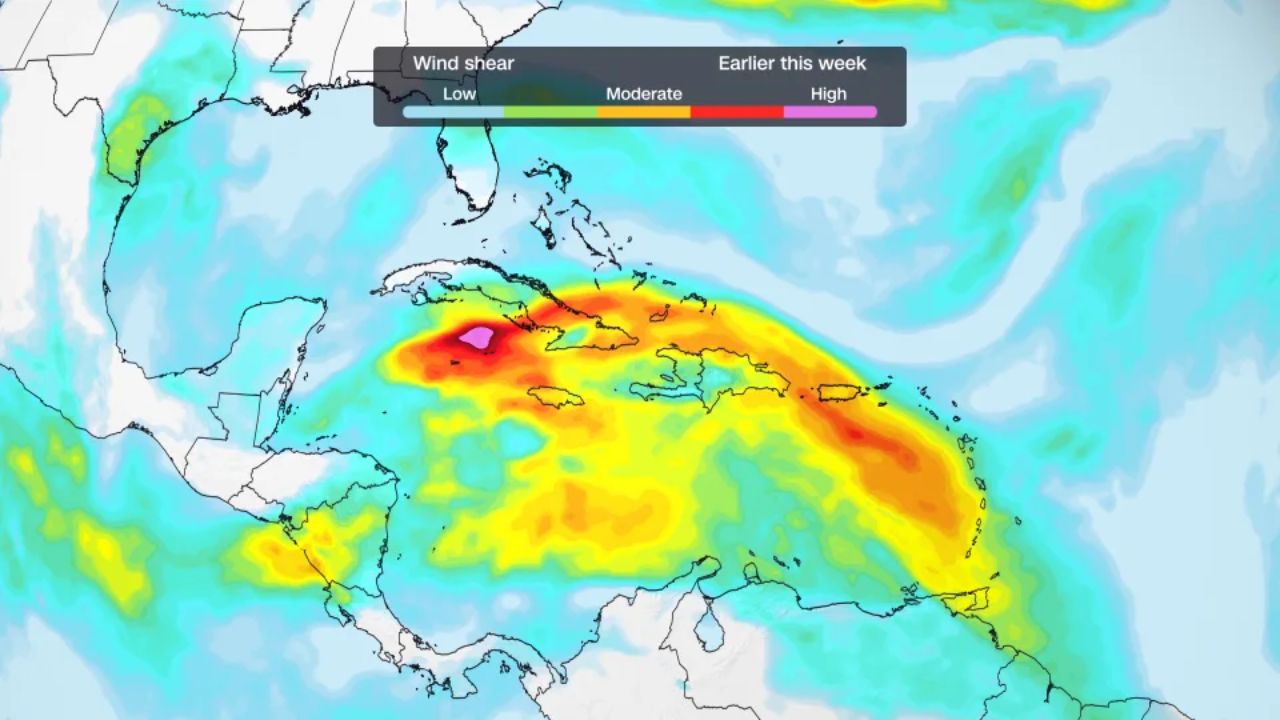
Its most destructive weapon against hurricanes is something called wind shear — rapid changes in wind speed or direction at different altitudes. Wind shear can tear a tropical storm apart before it ever has a chance to grow. Data from the National Oceanic and Atmospheric Administration shows that wind shear over the Caribbean had its second-highest start to July since satellite records began in 1979.
Tropical Storm Bertha formed in the Gulf of Mexico this week, but meteorologists say it faces an uphill battle. Extremely warm Gulf waters are giving the storm some fuel, but forecasters expect wind shear to ultimately prevent Bertha from reaching hurricane strength.
The same fate struck Tropical Storm Arthur earlier this season. Arthur formed close to the Texas coast — an area with slightly weaker wind shear — yet still triggered life-threatening flooding along the Gulf Coast before dissipating.
This is the critical warning scientists are now sounding: the quiet stretch is not a sign of safety. El Niño may be suppressing storms across the Atlantic, but storms that do develop closer to the Gulf Coast and southeastern shorelines are still fully capable of causing deadly flooding and destruction — with very little warning time for residents.
With the peak of hurricane season running from mid-August through mid-October, meteorologists urge coastal communities to remain prepared, regardless of how calm the season appears right now.