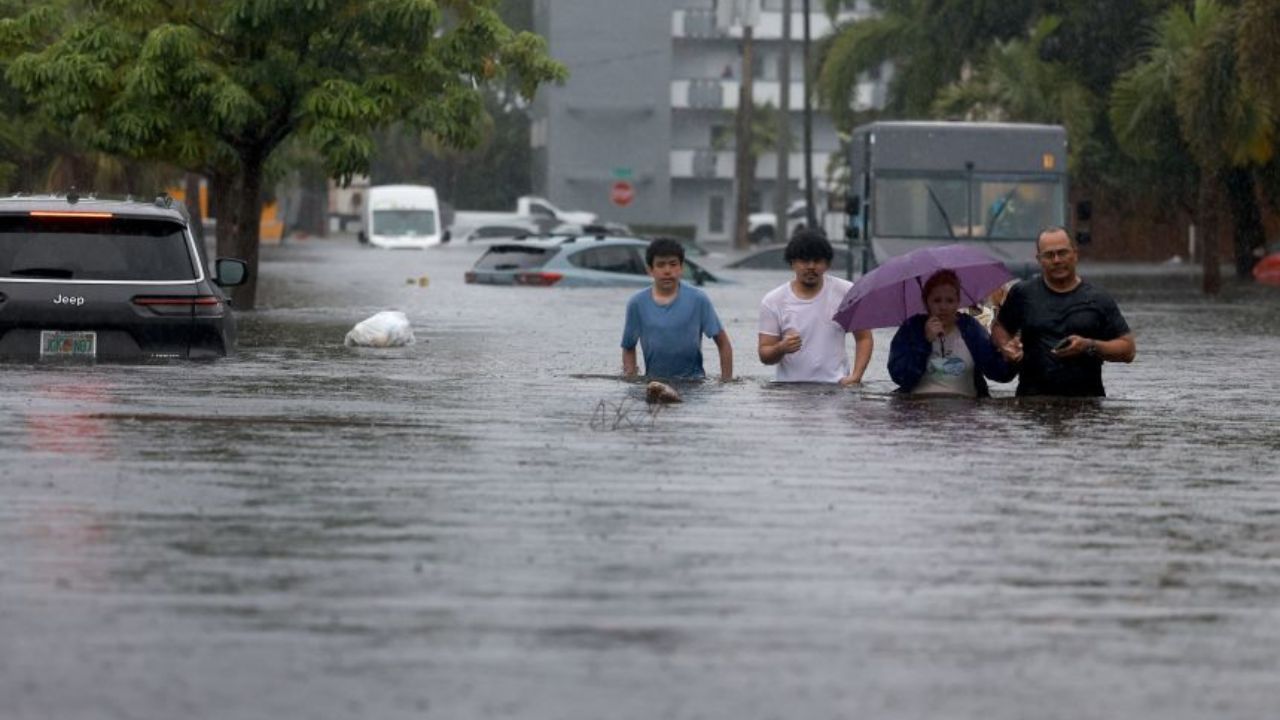
Jackson, Mississippi — Millions of residents across the South are facing an ongoing flood emergency as relentless rainfall continues to drench the region, triggering dangerous flash flooding, road closures, water rescues, and multiple fatalities.
The flooding threat intensified this week as moisture associated with the remnants of Post-Tropical Storm Arthur combined with tropical moisture from the Gulf, creating conditions favorable for repeated rounds of torrential rainfall across several states.
Forecasters warn that the threat is far from over, with additional heavy rain expected through the weekend.
Millions Remain Under Significant Flood Threat
Weather officials have issued a Level 3 out of 4 flash flood threat across portions of the Southeast, signaling the potential for widespread and potentially catastrophic flooding.
The risk area stretches from eastern Texas into parts of Georgia, with some of the most severe impacts reported in Louisiana, Mississippi, Alabama, and Texas.
Major metropolitan areas included in flood alerts and watches include:
- Baton Rouge, Louisiana
- New Orleans, Louisiana
- Jackson, Mississippi
- Montgomery, Alabama
- Atlanta, Georgia
Flood watches remain in effect across much of Louisiana, Mississippi, Alabama, and Georgia as forecasters monitor additional rounds of rainfall.
Officials have warned residents to remain alert for rapidly changing conditions, especially in low-lying and flood-prone areas.
Flash Flood Emergencies Issued Across Multiple Communities
As rainfall intensified, emergency officials issued several Flash Flood Emergencies, one of the highest levels of flood warnings available.
Among the hardest-hit areas were portions of Pearl River County in Mississippi, including the city of Picayune, as well as Avoyelles Parish in Louisiana.
Numerous roads became impassable as floodwaters quickly overwhelmed drainage systems and waterways.
Communities throughout the region have reported flooded neighborhoods, submerged vehicles, and dangerous travel conditions.
In many locations, emergency crews have been forced to conduct water rescues as residents became trapped by rapidly rising water.
Severe Weather Turns Deadly
The ongoing flooding has already claimed lives.
In Mississippi, a county road crew worker was killed while participating in storm cleanup operations in Franklin County, according to officials.
Earlier in the week, a separate tragedy unfolded in Texas when a 15-year-old died after becoming trapped in a storm-swollen retention pond.
Authorities launched an extensive search effort involving multiple agencies, rescue boats, diving teams, and sonar equipment.
After a lengthy search operation, responders located the teenager underwater and confirmed the victim had died.
The incidents underscore the dangers associated with floodwaters, which can become life-threatening in a matter of minutes.
More Heavy Rain Expected Through Saturday
Meteorologists say additional moisture moving northward from the Gulf of Mexico will continue feeding rain-producing systems across the region.
The heaviest rainfall is expected to focus on portions of Louisiana, Mississippi, Alabama, and Georgia through Saturday.
Forecasters are predicting widespread rainfall totals between 5 and 8 inches, with isolated areas potentially receiving even higher amounts where thunderstorms repeatedly move over the same locations.
Some communities that have already experienced flooding may see conditions worsen as saturated ground struggles to absorb additional rainfall.
Storm Chances Increase Across DFW Before Hot and Humid Father’s Day Weekend
Damaging Storms Also Possible
While flooding remains the primary concern, severe thunderstorms could also develop across parts of the South.
A Level 1 out of 5 severe weather risk extends from Texas through Georgia, including areas from Dallas to Savannah.
The main threat from these storms is expected to be damaging wind gusts, though localized severe weather impacts cannot be ruled out.
Emergency management officials continue urging residents to avoid flooded roadways, closely monitor weather alerts, and be prepared to move to higher ground if conditions deteriorate.
With additional rain expected and waterways already running high, communities across the South remain on alert for what could become one of the region’s most significant flooding events of the year.
Have flooding conditions affected your area recently?
What preparations do you think communities should make during repeated flash flood events? Share your thoughts and experiences respectfully in the comments below.