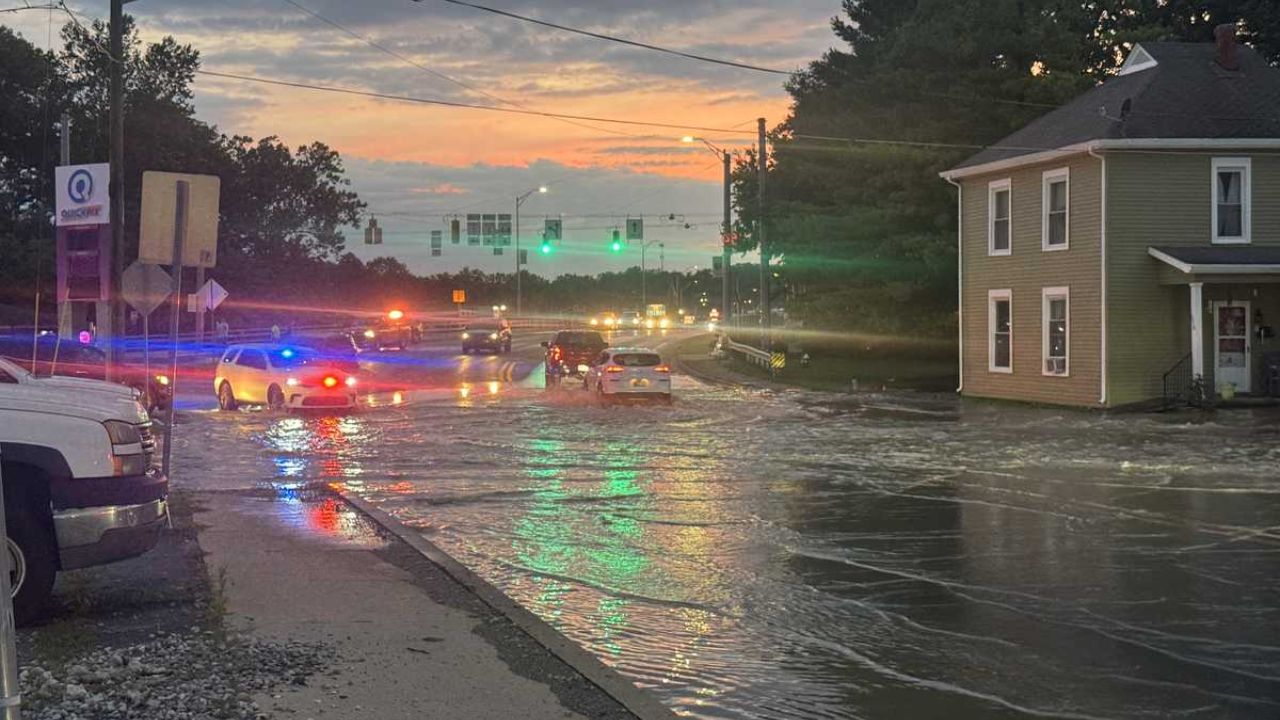
CAMBRIDGE CITY, INDIANA — A dangerous flash flood emergency has been declared for Cambridge City, Brownsville, and Dunlapsville after torrential rain overwhelmed the region, leaving roadways submerged under as much as five feet of water and forcing residents to scramble for safety.
Local law enforcement confirmed that floodwaters in Cambridge City reached depths capable of sweeping vehicles off the road entirely. Officers are warning that anyone caught driving through these conditions faces extreme, life-threatening risk, and they are urging residents to abandon their vehicles and head for higher ground rather than attempt to push through.
The National Weather Service has labeled the situation a “particularly dangerous scenario,” cautioning that significant property damage is likely across the affected communities. The emergency warning was originally set to run until 11:15 AM CDT on Wednesday, though officials note that hazardous conditions could persist well beyond that window as water continues to drain through low-lying areas.
The flooding followed an intense burst of rainfall, with parts of the region recording between 3.5 and 6.5 inches in a short span. Weather radar showed the heaviest bands sitting directly over Richmond and Cambridge City, an unusually extreme concentration that caught many residents off guard.
The danger zone stretches beyond the three towns directly under emergency order, reaching Richmond and extending north toward New Castle. Heavier rainfall impacts have also been felt as far north as Muncie and Winchester, and as far south as Connersville and Brookville, putting a wide swath of east-central Indiana on alert.
Authorities are repeating a simple but critical message to anyone in the path of the flooding: do not attempt to walk, swim, or drive through standing water. Turning back, officials say, remains the only safe choice. Residents in low-lying areas are being told to move to elevated ground immediately and monitor local emergency alerts as the situation continues to evolve.