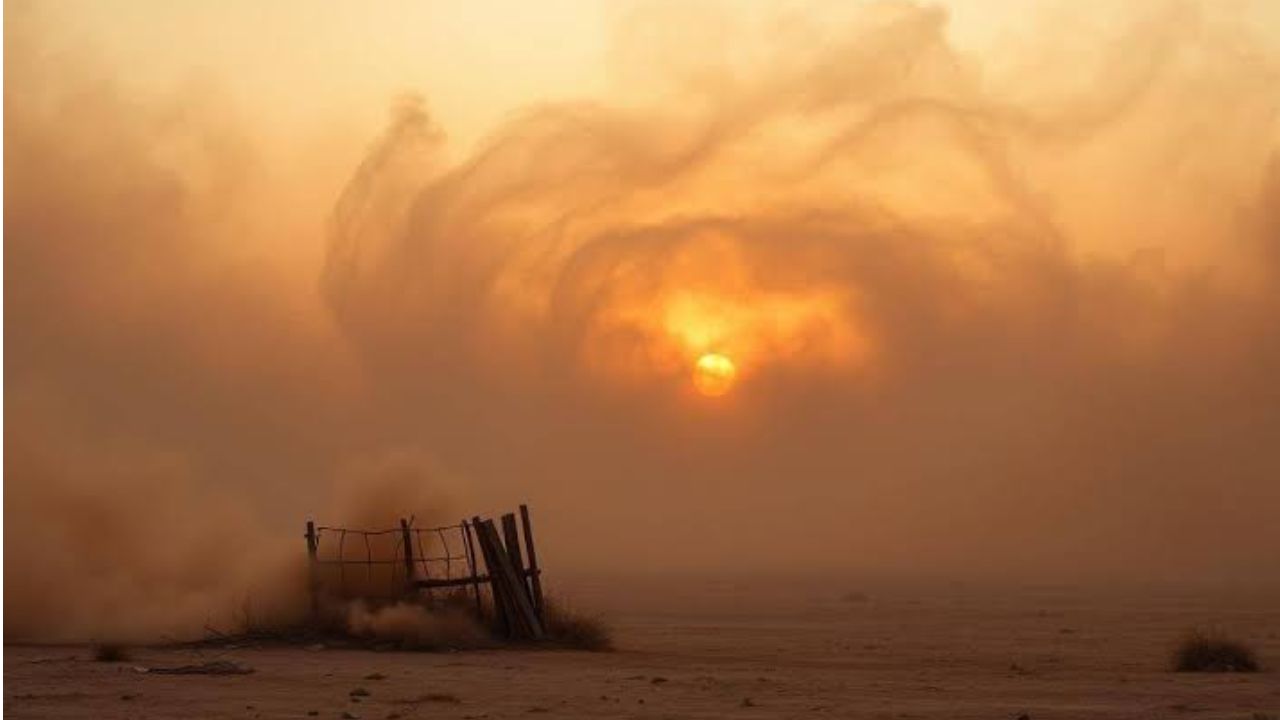
Florida — A massive plume of Saharan dust is making its way across the Atlantic Ocean and is expected to blanket Florida and much of the Gulf Coast this weekend, bringing hazy skies, warmer temperatures and potential air quality concerns.
The cloud of dust has traveled more than 5,000 miles from the Sahara Desert in North Africa through the Caribbean before reaching the southeastern United States. Forecasters say residents across Florida will likely begin noticing increasingly milky skies and dusty conditions as the plume settles over the state.
Dust Expected to Peak Over Florida This Weekend
According to forecasters, the dust will become most concentrated across Florida on Saturday, creating noticeably hazy skies across much of the state.
By Sunday, the dust plume is expected to spread across the entire Gulf Coast region, with the highest concentrations extending over the Gulf before reaching parts of South Texas by Monday.
Meteorologists say the dust is likely to remain over Florida and neighboring Gulf Coast states through most of next week, meaning residents could experience several days of reduced visibility and hazy conditions.
Video captured in Dania Beach, Florida, on Wednesday morning already showed a slightly hazy sunrise as the leading edge of the dust approached the Southeast.
What Is the Saharan Air Layer?
The dust originates from the Saharan Air Layer, a massive pocket of hot, dry, dusty air that forms over the Sahara Desert.
Strong winds lift millions of tiny dust particles high into the atmosphere, allowing them to travel thousands of miles across the Atlantic Ocean each year.
While these dust outbreaks are common during the summer months, they can significantly affect weather conditions across Florida, the Caribbean and parts of the Gulf Coast.
Meteorologists note that the dry air associated with the Saharan Air Layer often helps limit tropical storm development, making it more difficult for developing systems to strengthen.
Haze, Hotter Temperatures and Air Quality Concerns
Beyond creating hazy skies, the incoming dust can also influence temperatures.
Forecasters say the dust may act like a thermal blanket, trapping heat near the surface and allowing daytime temperatures to climb even higher across parts of Florida and the Gulf Coast.
Residents may also notice more vibrant sunrises and sunsets, as the tiny dust particles scatter sunlight differently than clear air.
However, the dust can also reduce air quality, particularly for people with asthma, allergies, chronic lung disease or other respiratory conditions.
Health officials often recommend limiting prolonged outdoor activity if dust concentrations become elevated, especially for individuals who are sensitive to poor air quality.
Caribbean Islands Also Under Advisory
The effects of the dust are not limited to the United States.
The U.S. Virgin Islands Department of Health has also warned residents about the combination of Saharan dust and extreme heat, advising people to stay hydrated, monitor air quality conditions and take precautions if they have respiratory issues.
As the plume continues moving westward, millions of people across Florida, the Gulf Coast and parts of the Caribbean are expected to experience several days of hazy skies before conditions gradually improve later next week.
Are you noticing hazy skies or colorful sunsets where you live? Share what you’re seeing and let us know how the Saharan dust is affecting your area in the comments below.