United States — As millions of Americans head to beaches this summer, water safety experts are reminding swimmers that one of the ocean’s greatest dangers often goes unnoticed.
Unlike sharks or massive waves, rip currents are responsible for about 100 deaths each year along U.S. beaches, according to the Associated Press. The United States Lifesaving Association also estimates that rip currents account for more than 80% of all surf rescues, making them one of the leading causes of beach emergencies.
With dozens of lives already lost in U.S. waters this year, lifeguards are urging beachgoers to learn a simple survival technique that could make all the difference.
Rip Currents Can Form Even on Calm Beach Days
Many people assume dangerous water conditions only exist during storms or rough surf, but experts say rip currents can develop even when the ocean appears calm.
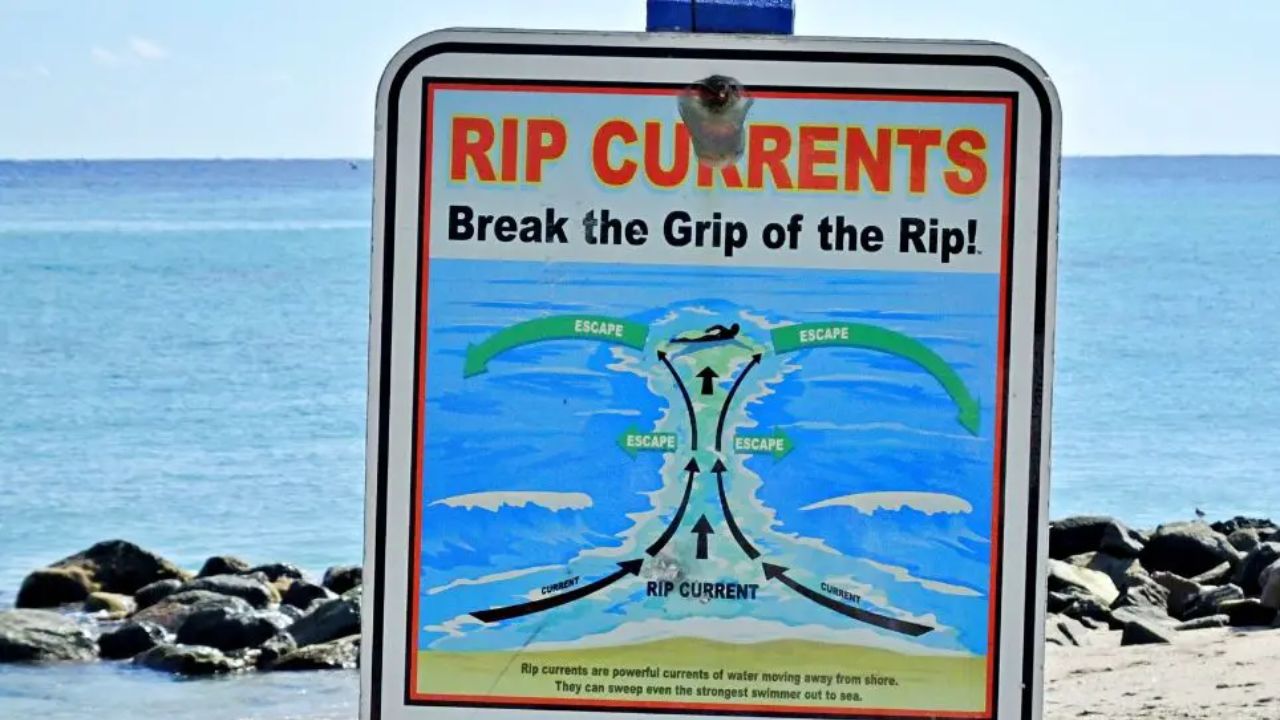
A rip current is a narrow, fast-moving channel of water that carries water away from shore.
Rather than pulling swimmers underwater, these currents quickly move them farther from the beach, often faster than they can swim back.
San Diego Lifeguard Marine Safety Lt. Charlie Knight compared the phenomenon to a river flowing into the ocean.
“A rip current is like a river that pulls out to sea,” Knight told the Associated Press.
According to the National Oceanic and Atmospheric Administration (NOAA), some rip currents can move at speeds of up to 8 feet per second, faster than many Olympic swimmers.
These currents commonly form near sandbars, jetties, piers, and low areas along the shoreline.
The Biggest Mistake Swimmers Make
When people realize they are being carried away from shore, their instinct is often to swim directly back to the beach.
Lifeguards say that reaction can quickly lead to exhaustion because swimmers are fighting against a powerful current.
Instead, experts recommend remembering a simple phrase:
“Flip, Float and Follow.”
Rolling onto your back helps conserve energy, keeps your face above the water, and allows you to stay calmer while the current carries you away from shore.
“Flip, float and follow,” Knight advised.
Once the current weakens, swimmers may be able to swim parallel to the shoreline until they escape the current before gradually returning to shore.
If unable to swim, raising an arm and calling for help can alert nearby lifeguards or other beachgoers.
Simple Steps Can Prevent a Tragedy
Safety experts say the best protection begins before entering the water.
Before heading to the beach, visitors should check local rip current forecasts issued by the National Weather Service and pay close attention to warning flags.
A red flag signals dangerous surf conditions, while double red flags indicate that the water is closed to the public.
Swimming near lifeguard stations also greatly increases safety, since trained responders can react quickly during emergencies.
Forecasters Warn of Dangerous Weather Pattern as Severe Storms Give Way to Record-Breaking Heat
If someone else becomes trapped in a rip current, officials advise against attempting a rescue unless properly trained.
Instead, immediately notify a lifeguard or call 911 while keeping visual contact with the person in the water.
Awareness Can Save Lives
Water safety experts emphasize that rip currents are a natural part of the ocean and can occur at beaches across the United States.
Understanding how these currents work—and resisting the urge to panic—can significantly improve the chances of surviving an encounter.
As beach season continues, officials hope greater awareness and preparation will help prevent additional tragedies and keep families safe while enjoying the water.
Have you ever experienced a rip current or witnessed a beach rescue?
What water safety tips do you think every beachgoer should know before heading into the ocean? Share your thoughts respectfully in the comments below.