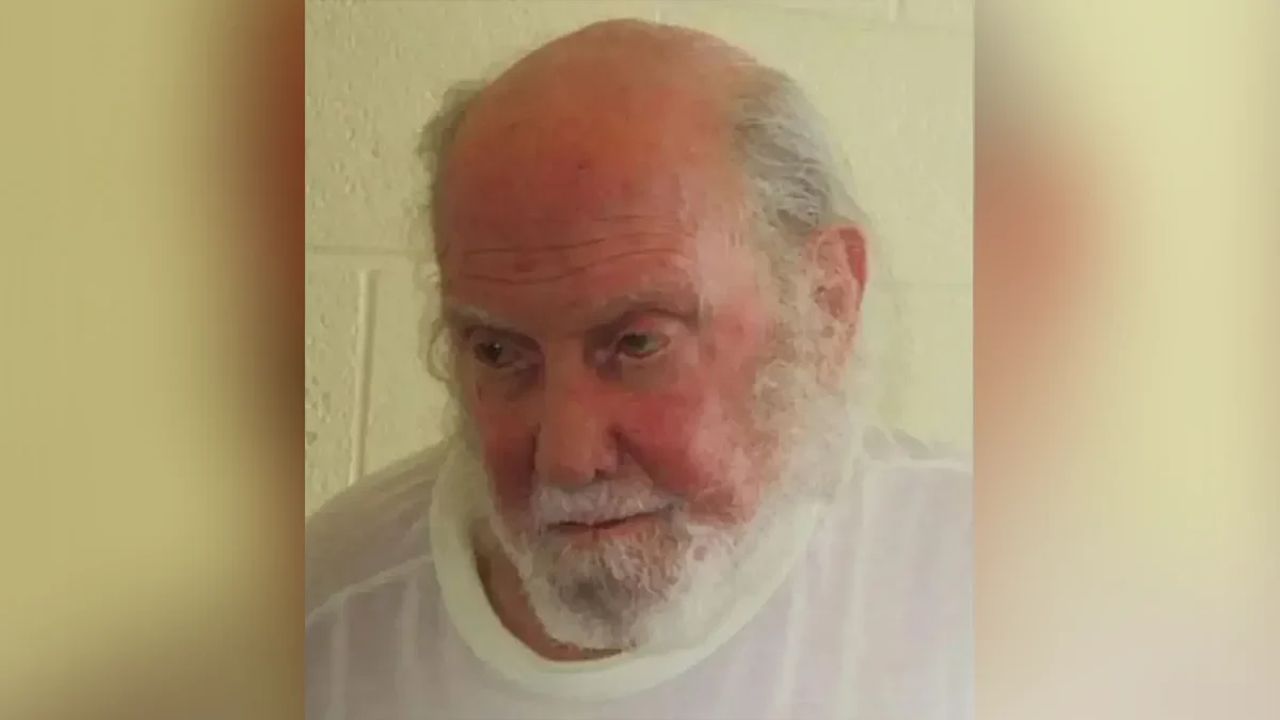
A man widely regarded as one of the longest-held inmates in American history has passed away at 101, closing out a remarkable saga that saw his execution date pushed back on eight separate occasions over more than seven decades behind bars.
Francis Clifford Smith passed away peacefully in his sleep in late June at 60 West, a Connecticut care facility that specializes in housing elderly individuals within the justice system. He was just a few months shy of his 102nd birthday. In keeping with his wishes, he was cremated and no funeral service was held.
David Skoczulek, a spokesperson for 60 West, described his passing simply as a result of natural aging. He noted that while Smith had little family present around the time of his death, staff made sure the process was handled with care and dignity.
A Death Sentence That Never Stuck
Smith’s decades-long ordeal began in 1949, when he was just 25 years old. He was convicted and sentenced to death for the shooting death of Grover Hart, a 68-year-old security guard working at a yacht club in Connecticut, during what authorities described as a botched robbery attempt on July 23 of that year.
Police also arrested a second man, George Lowden, in connection with the case. Lowden struck a plea deal and initially pointed the finger at Smith, but he later claimed that investigators had physically coerced him into making that statement. When it came time for trial, Lowden refused to testify against Smith.
Despite the shaky foundation of the case, Smith spent the next 76 years in custody. During that time, prison officials scheduled his execution eight separate times — and each time, it was called off before it could happen, according to reporting from the Boston Globe.
Doubts That Never Went Away
Smith insisted he was innocent all the way to the end of his life, according to people close to him. Speaking to the Boston Globe in 2023, he was blunt about his situation, saying there was no real evidence tying him to the crime.
Over the decades, the case against him began to unravel in several ways. A witness who had originally linked him to the killing later withdrew her testimony. Lowden, the co-defendant, also walked back his original statement. And separately, another inmate serving time in Alabama came forward claiming that he — not Smith — was the one involved in Hart’s death.
These developments played a significant role in the repeated delays to Smith’s execution and in various attempts to secure him a new trial. Leo Carroll, a former officer who had questioned Smith following his arrest, later testified before the state’s Board of Pardons ahead of Smith’s eighth scheduled execution that he wasn’t even confident Smith had been at the scene of the crime.
Even so, courts never granted Smith a new trial. A judge who examined the confession from the Alabama inmate ultimately dismissed it as unconvincing, leaving Smith’s original conviction in place.
From Death Row to Decades of Confinement
In 1954, Smith’s death sentence was formally reduced to life imprisonment. From there, he remained incarcerated for the majority of the next several decades, with only a handful of brief exceptions — including a 12-day stretch on the run after breaking out of custody in 1967.
He got another shot at freedom in 1975, when he was granted parole. That freedom lasted roughly 10 months before he was picked up on larceny and weapons-related charges and sent back to prison for breaching his parole terms. Notably, the Boston Globe reported that he was never actually convicted on those particular charges.
In the years that followed, records show Smith turned down or didn’t pursue several chances at parole — though he later said he disputed that account and simply couldn’t recall the details. That changed in 2020, when he agreed to a supervised parole arrangement that placed him at the nursing facility where he would eventually spend his final years.
By the end of his life, Smith was reportedly living with dementia, though Connecticut’s Department of Correction has not officially confirmed that diagnosis. The department instead described his condition as consistent with general age-related decline.
Andrius Banevicius, a public information officer with the state’s Department of Correction, reflected on Smith’s unusually long life, noting that at 101 and a half, he’d done remarkably well in terms of sheer longevity.