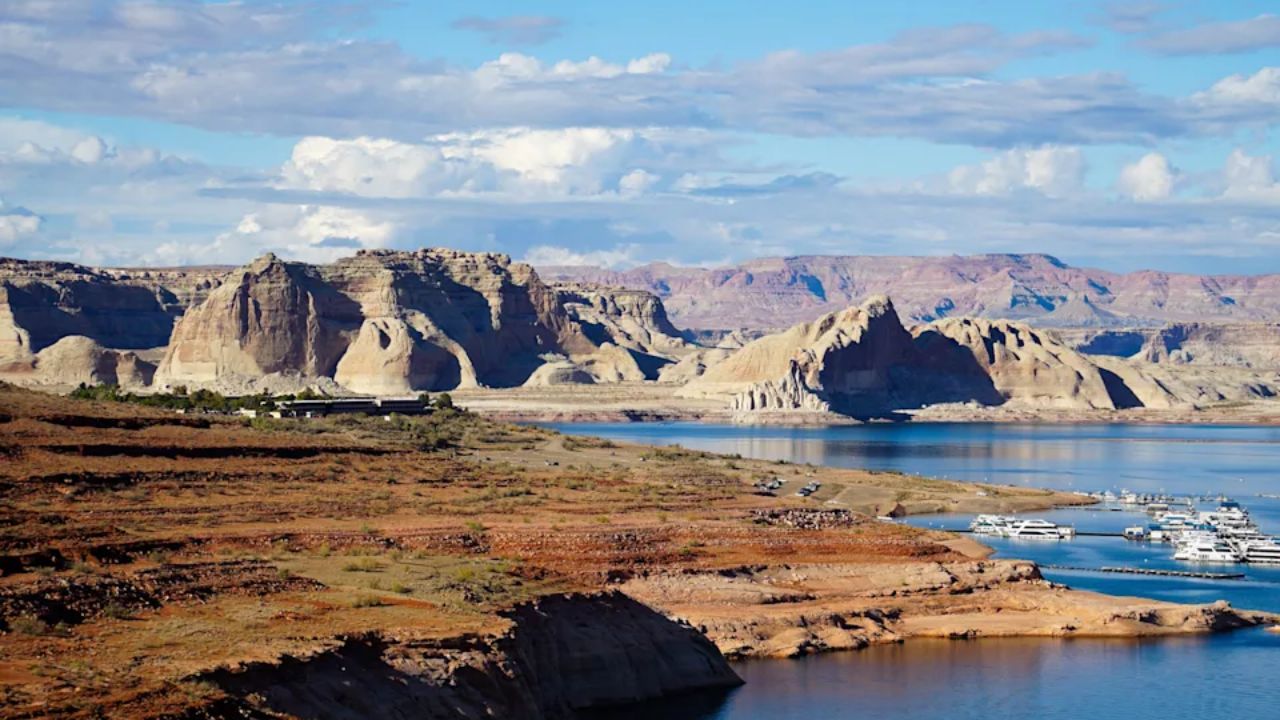
LAS VEGAS, Nevada — Lake Mead and Lake Powell, the two largest reservoirs in the United States, have fallen to their lowest storage levels ever recorded, according to the U.S. Bureau of Reclamation.
Combined storage in both reservoirs dropped to roughly 12.7 million acre-feet earlier this month, surpassing a previous record low set in March 2023. Officials say this marks the lowest combined level since 1957, when Lake Powell had not yet begun filling during construction of Glen Canyon Dam.
The Colorado River, which feeds both reservoirs, supplies water to an estimated 40 million people across seven Western states, including Arizona, California, Nevada and Colorado. The river relies heavily on snowpack from the Intermountain West, which received unusually low snowfall over the past winter, worsening an already prolonged water shortage.
According to the Bureau of Reclamation, Lake Powell alone has dropped to a record-low elevation this week, intensifying concerns among water managers who oversee the region’s long-term supply.
But federal forecasters say a shift may be forming. The National Oceanic and Atmospheric Administration reports that the odds of a strong El Niño developing in the Central Pacific by fall have increased in recent weeks. The naturally occurring climate pattern is known to reshape storm tracks across the Pacific, often steering more moisture into the Western U.S. during winter months.
If it develops as expected, forecasters say the pattern could boost snowpack across the Intermountain West and increase spring runoff into both reservoirs — offering a possible, though uncertain, reprieve.
Officials caution that even a historically wet winter would not be enough to reverse more than two decades of steady decline at the two reservoirs. Water levels are expected to keep falling until spring runoff begins, with additional record lows considered likely between now and then.
For now, millions across the Southwest are left watching two numbers — and one incoming weather pattern — that could shape water access for years to come.